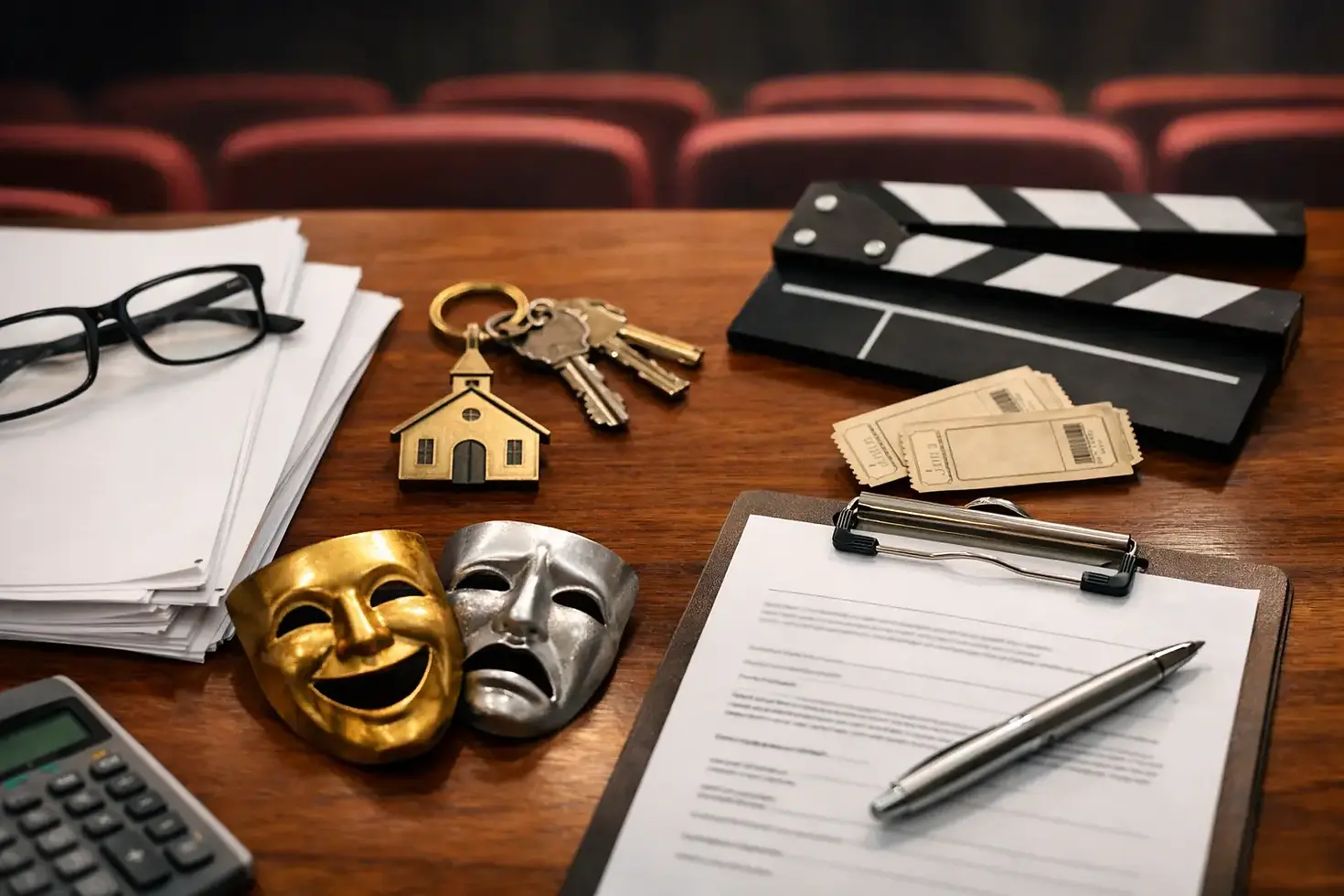
Guide to Parish Theater Licensing

The first surprise for many parish leaders is this: even if a musical is wholesome, Catholic, and meant for ministry, you still need permission to perform it. A good guide to parish theater licensing begins there - not with paperwork for its own sake, but with respect for the artists, composers, writers, and ministries who labored to create something beautiful for the Church.
When a parish stages a production, it is doing more than filling a weekend on the calendar. It is forming hearts, gathering families, and giving young people a chance to serve with their gifts. That is precisely why licensing matters. If a work is worth sharing with your community, it is worth honoring in the way the law and the creators intend.
What parish theater licensing actually means
Parish theater licensing is the permission granted by the rights holder to present a dramatic work publicly. In plain terms, if your parish, school, homeschool co-op, or Catholic theater group wants to perform a script, musical, or staged devotional work, you usually need a license before rehearsals begin.
This permission often covers far more than the words on the page. A dramatic license may include the script, songs, orchestrations, accompaniment tracks, logos, artwork, staging rules, and limits on adaptation. If a production involves music, video capture, livestreaming, translation, or printed programs, those may require separate approval. This is where many well-meaning groups get tripped up. They assume that buying books or sheet music is the same as buying performance rights. It is not.
For Catholic communities, there is also a moral dimension. Creative work is labor. It deserves just compensation. Respecting rights is part of acting justly, especially when the work itself is offered in service of evangelization.
A practical guide to parish theater licensing
The most helpful way to approach licensing is to think pastorally and practically at the same time. Start early. Rights questions should come before auditions, before advertising, and certainly before ticket sales.
Begin by identifying the exact work you want to perform. Titles can be similar, and different versions may exist. A parish-friendly edition may have different requirements than a school edition or a professional production package. You will want the official title, the author or composer, and the name of the company or ministry that controls the rights.
Next, clarify the details of your planned production. Rights holders usually need to know your performance dates, venue size, number of performances, expected audience, ticket prices, and whether the show is being presented by a parish, school, or independent group. They may also ask whether your cast is made up of minors, whether you plan to charge admission, and whether you want physical materials or digital files.
That information does two things. It helps the rights holder quote the correct fee, and it protects your parish from accidentally receiving the wrong kind of license. A small parish hall production with one piano accompanist is not the same as a regional run with multiple weekends and premium ticket pricing.
Once you have the terms, read them with care. This part of any guide to parish theater licensing deserves patience. Some licenses are simple and generous. Others are tightly defined. You may be restricted from changing lyrics, cutting scenes, altering costumes in a way that changes meaning, or adding projected media. You may also be prohibited from recording or livestreaming the performance, even if the stream is only for grandparents or homebound parishioners.
That can feel frustrating, especially in a church setting where people want to share good things widely. Still, permissions exist for a reason. Authors may be protecting the integrity of the story, the theology of the text, or the financial model that allows the work to remain available for ministry.
Common parish mistakes to avoid
Most licensing problems do not come from bad intent. They come from assumptions. A parish buys a script and thinks that is enough. A school posts rehearsal clips online without realizing that music rights may be limited. A well-meaning director edits a scene for time and never asks permission. These are ordinary mistakes, but they can still create legal and ethical trouble.
Another common issue is using a production in ways not covered by the agreement. If your license is for one weekend only, you cannot simply add a Sunday matinee because ticket demand was strong. If your parish receives permission for in-person performances, that does not automatically include filming, posting excerpts on social media, or sharing a full recording with donors.
Translation is another area that deserves caution. Many Catholic communities are beautifully multilingual, and that is a blessing. But translating a script, song, or narration into Spanish, Portuguese, Tagalog, or another language usually requires specific approval. The same is true if you want to combine languages within a performance. The pastoral desire to include everyone is deeply good, but the legal right to adapt language still belongs to the rights holder.
How fees, royalties, and materials usually work
Licensing costs vary, and there is no single parish standard. Some rights holders offer modest rates for churches and schools. Others price according to audience size, number of performances, or whether admission is charged. Materials such as director guides, vocal books, accompaniment scores, rehearsal tracks, and branding assets may be included or sold separately.
It helps to budget for more than the base license. You may need shipping time for physical materials, replacement fees for missing items, or additional costs for extra scripts and musician parts. If your production uses recorded accompaniment, ask whether that is included in the package or licensed separately. If your parish wants to sell merchandise, souvenir programs, or cast recordings, those rights are almost never automatic.
The trade-off here is real. Lower-cost materials may mean fewer customization options or less production support. A fuller package may cost more, but it can save a parish many hours by providing staging notes, rehearsal structure, promotional guidance, and approved artwork.
Choosing a work that fits your parish
Licensing is not only about permission. It is also about discernment. Not every beautiful script is right for every parish. A wise director looks at theological clarity, cast size, rehearsal demands, musical difficulty, and the spiritual maturity of the community.
A parish with limited rehearsal time may do better with a smaller, prayerful production than with a large musical requiring complex choreography and orchestra parts. A school with strong singers but a small budget may need a work with accompaniment tracks rather than live musicians. A bilingual community may benefit from a title whose creators already offer approved multilingual pathways.
This is where mission and practicality should meet. The strongest Catholic productions do not strain a parish into exhaustion. They invite participation, protect reverence, and leave room for grace.
Questions to ask before signing
Before accepting a licensing agreement, ask what is included, what is prohibited, and what needs separate approval. Confirm your dates, audience limits, venue details, and whether your parish may use the title and artwork in bulletins, posters, and social media. Ask directly about video clips, photography, livestreams, and archival recordings.
You should also ask what support is available. Some publishers simply issue rights. Others serve parishes with real care, offering production notes, music resources, and guidance shaped by ministry experience. That difference matters, especially for volunteer directors. When a faith-based rights holder understands both artistic integrity and parish life, the process becomes less intimidating and more fruitful. Mother of God Studios is one example of this ministry-minded approach, especially for Catholic productions rooted in Marian devotion.
Why this matters beyond compliance
A parish production is never only a production. It is a witness. When your community licenses a work properly, rehearses it faithfully, and presents it with reverence, you are telling your cast and audience something important: beauty and truth deserve our best response.
Children learn that creative gifts are not casual things to be borrowed, but offerings to be stewarded. Volunteers see that ministry does not excuse shortcuts. Audiences experience a performance that carries not only inspiration, but integrity.
That is the heart of any faithful guide to parish theater licensing. It is not merely a way to avoid problems. It is a way to honor the labor behind sacred storytelling and to prepare the ground for a production that bears real spiritual fruit.
If your parish is considering a play or musical, begin with prayer, then move with clarity. Ask permission early, read the terms carefully, and choose a work that truly serves your people. The right production, rightly licensed, can become more than an event. It can become a memory of grace your community carries for years.


Comments